I suspect that most of the individuals who have religious faith are content with blind faith. They feel no obligation to understand what they believe. They may even wish not to have their beliefs disturbed by thought. But if God in whom they believe created them with intellectual and rational powers, that imposes upon them the duty to try to understand the creed of their religion. Not to do so is to verge on superstition.
After we see God celebrate virtues that our secular counterparts would hardly consider virtuous, we have to ask: If God intends for me to suffer, why?
The answer is in the next passage:
You are the salt of the earth, but if salt has lost its taste, how shall its saltiness be restored? It is no longer good for anything except to be thrown out and trampled under people’s feet. (Mt 5:13)
Salt is a preservative. Jesus is calling on Christians to preserve the virtues that God finds honorable and good. To that end, when we become a new creation in Christ, God then molds us into the image of his Son (Rom 8:3-4, 12-14, 29-30) — not for our sake, but for the world’s sake:
You are the light of the world. A city set on a hill cannot be hidden.Nor do people light a lamp and put it under a basket, but on a stand, and it gives light to all in the house.In the same way, let your light shine before others, so that they may see your good works and give glory to your Father who is in heaven. (Mt 5:14-16)
In other words, don’t just be a Christian on Sunday in church. Be one at work, at rest, at play, in your marriage, on a plane, on a boat, on a train, in your house, when you’re here, or there, and everywhere (1 Cor 10:31).
James, brother of our Lord, echoes the sentiment: “Religion that is pure and undefiled before God, the Father, is this: to visit orphans and widows in their affliction, and to keep oneself unstained from the world” (Jms 1:27).
Do what God has commanded, and do it boldly. And in the process, do not become like the rest of the world. It’s a simple message, a simple prospect, and it has a powerful world-renewing effect for those who live it out.
Authors of new book highlight irrationality of atheists' claim to be defenders of reason
Leading atheist Richard Dawkins has said, “The time has come for people of reason to say: Enough is enough! Religious faith discourages independent thought, it’s divisive and it’s dangerous.” Today, Christian thinkers from around the world announce the publication of the Patheos Press ebook “True Reason: Christian Responses to the Challenge of Atheism.”
Featuring chapters by Dr. William Lane Craig, Sean McDowell, and eleven other Christian scholars and thinkers, “True Reason” presents a well-reasoned rejoinder to the arrogance of the New Atheists and their upcoming “Reason Rally.” The book:
Demonstrates New Atheist leaders’ consistent failure in the use of reasoning.
Explains how the Christian faith and good reasoning work well together.
Clarifies the reasonability of Christian practice now and throughout history.
“This is a book to encourage, inform, and equip Christian believers. It’s also bound to raise controversy,” said general editor Tom Gilson. “The careful reasoning of this book will deliver a tremendous challenge to the New Atheists as they prepare for their ‘Reason’ Rally in Washington. And it will benefit Christians long after that, by equipping them for challenges to the faith that are bound to keep on coming,” added Gilson.
“True Reason” is co-edited by Gilson, a ministry strategist and author working jointly with Campus Crusade for Christ and the Colson Center for Christian Worldview, and Carson Weitnauer, director of Telos Ministries, a campus ministry that reaches the intellectual elite at Boston area universities including Harvard.
The book is being released in conjunction with an initiative to bring dozens of thoughtful Christians to the Reason Rally, to create an obvious contrast between the Reason Rally and True Reason. The Reason Rally takes place on the National Mall in Washington D.C. on March 24, 2012, with headline speakers including Richard Dawkins, Lawrence Krauss, and Adam Savage of Mythbusters, and the rock band Bad Religion.
If you’re a theist on Twitter, particularly if you debate a certain guy named BibleAlsoSays (BAS), you have undoubtedly seen a map like this:
BAS acts like this is unassailable proof that religion is a steaming and moldy pile of donkey crap baking on the otherwise unblemished Sidewalk of Reality in the Harsh Sun of Truth and Reason.
“Look,” he’ll say, “at how all of the religions group into geographic regions. That means that parents pass religion to the children, who accept it uncritically, and never grow out of it. If not for parental brainwashing, these children would grow up normal!”
If the intrepid apologist points out that this logically flawed, BAS asks you for an alternate explanation of the map.
Know what? There is no alternate explanation. The world religions group so nicely exactly for the reason that BAS claims. Parents teach their faith to their children, who never question or jettison it in favor of something more palatable.
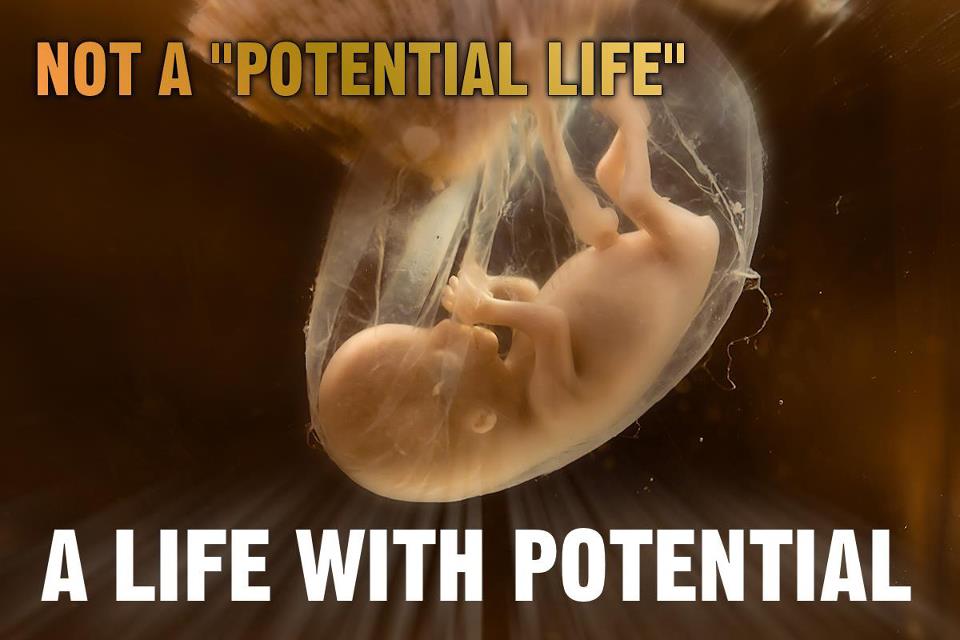
It is January 22, the anniversary of the worst Supreme Court decision ever — the decision granting a woman the right to kill her unborn baby in the womb as a matter convenience. This day is used by NARAL to celebrate this grotesque choice, and they encourage bloggers and tweeters to talk about the woman’s right to “choose.”
But what are these women really getting to “choose?”
Abortion advocates say that this “choice” advances the cause of womankind and empowers the woman with freedom over her own body. She is no longer a slave, she doesn’t have to be forced to surrender her vital organs to sustain something she may not have wanted in the first place.
So, those who hold the unopposed power of life and death over another human being are justified in using that power to kill someone who is a mere inconvenience?
Let’s get real. As much as the pro-abortion crowd likes to belly-ache about situations like rape, incest, or saving the life of the mother, few abortions are actually performed for those reasons. Most abortions are performed for convenience. An unexpected pregnancy might be detrimental to the plans of the woman and/or man who would be the parents of the resulting child, so they kill the child. It’s as simple as that.
Or the child is the wrong sex.
Or the child has a deformity or has the markers for a mental handicap.
This means that most women who have abortions are doing so out of selfish reasons.
An old episode of He-man and the Masters of the Universe illustrated this exact situation, with fantasy elements (of course). In this episode, Skeletor (the villain) has learned the location of the Starseed. This artifact is a piece of the singularity that resulted in the Big Bang — and whoever possesses it has the power of God. Total omniscience along with omnipotence.
Let’s see what happens when He-man and Skeletor battle to possess it:
Do you agree that He-man made the correct decision?
Holding the power of life and death over another person in your hand and not using it is far more powerful than using it. In the cartoon here, as well as in real life, holding someone’s life in your hands and ending it is always an evil act.
Reality check for my fellow pro-lifers: Our side makes a big deal about electing only pro-life officials to Congress or the Presidency, over getting the right mix of Justices in the Supreme Court to overthrow Roe v. Wade. The government isn’t where we are going to win the battle, nor where we are going to make the greatest impact. It is with this power of choice.
The powerful testament to He-man’s character in that clip comes from the fact that he has the power to obliterate Skeletor, but he chooses not to. For all his evil scheming, Skeletor surely deserves nothing less than annihilation. However, He-man chooses to preserve Skeletor’s life — and when faced with the chance to kill his greatest enemy he reacts with mercy and forgiveness.
As Zodac points out, He-man’s refusal to use the power of the universe for selfish gain demonstrated his goodness.
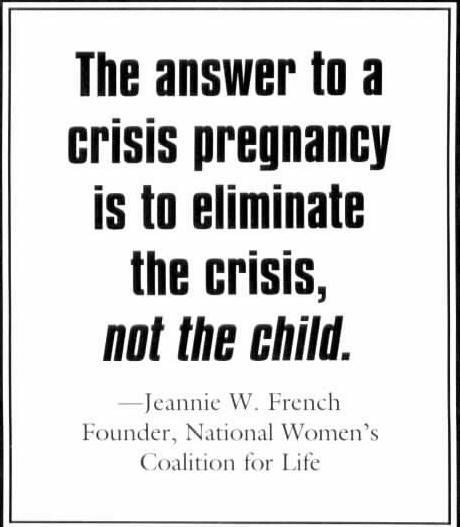
Pregnancy is a responsibility handed to the pregnant woman by God, and abortion is the coward’s way to duck that responsibility. How much of a testament to a woman’s character would it be if she were in dire straits, became pregnant, had the option of aborting the child, yet still chose life for her unborn child?
The battle for abortion won’t be won in sweeping, preventative legislation. It will be won in the trenches with individual women, one choice by life-affirming choice at a time.
So far, I’ve been on time with Contradiction Tuesday, but late with Scripture Saturday. Every single time.
This new job has really cut into my blogging time!
Not that I’m complaining, mind you. After all, I need the money. And, for the first time since I can remember, I actually like my job.
Now on to Scripture Saturday.
Many atheists argue that God is a moral monster. They say that he has appalling standards compared to us humans.
Have you ever wondered why this is so? Why do atheists think God is evil for punishing sinful people (like the Canaanites)? Or why do they think he is a bumbling moron for allowing the Fall or creating Satan?
Simple. Atheism isn’t just a rejection of the concept of a deity. It is a decision with a serious moral dimension, and terrible consequences for the atheist — and I’m not referring to hell. I’m referring only to earthly consequences, especially in the way one thinks as an atheist. Let’s look at the Scriptures:
Evil men do not understand justice, but those who seek the LORD understand it completely. (Prv 28:5)
Are atheists evil? Maybe some are. Most aren’t by human standards. But by divine standards, they are as messed up as the rest of us (Rom 3:23). The bigger picture is the second clause — people who seek the Lord understand justice.
Without seeking God first, perfect and flawless justice will mean nothing.
The atheist can hem and haw all he wants about how he sought God and there was no God to be found. Balderdash. He fails to understand true justice because he is not seeking God.
Therefore, God’s actions against people like the Canaanites seem to the atheist inexplicable and mysterious; evil or disgusting. The atheist isn’t seeking God when examining the Bible, he’s really just window shopping “the god of some other religion” and comparing its actions with what he already believes morality to look like. He finds this god as coming up short, and therefore Christianity is yet another religion that fails to meet his criteria.
No wonder he doesn’t believe in God.
Instead, reverse all that. Let God set the bar, since God is (after all) God. Then measure yourself by his standard.
What’s happening, according to Scripture, is that since the atheist is not seeking God, he cannot understand justice.
God is often cited as the God of peace, for example:
Now the God of peace be with you all. Amen. (Rom 15:33)
However, the Bible also describes God in terms related to battle:
The LORD is a man of war: the LORD is his name. (Ex 15:3)
So, “Which is it?” asks Jim Merrit.
Why not both?
Humans are made in the image of God. Humans are dynamic. Humans don’t act the same way in every circumstance. We adapt. So why can’t the One in whose image we are made not adopt a different approach based on the circumstances?
It’s ludicrous to reduce God to a one-dimensional construct who can’t act on a case-by-case basis. Christians do this with God’s love, assuming God loves everyone the same and in equal measure — and that leads to the absurd notion that God couldn’t get mad at someone or that he won’t judge people and that everyone will end up in heaven by his side.
The truth is that God is more complex than we are in his behavior and his character. God loves us all, but in different ways. For example, you don’t love everyone in your own life in equal measure. Many people might let you down or disappoint you, and that changes the way that you feel about them.
And so it is with God.
When the circumstances call for God to be a God of peace, he is. When circumstances call for God to be a man of war, he is. Same God, but acting differently in different circumstances.
Today, we introduce the second feature new to Josiah Concept Ministries: Contradiction Tuesday. Each Tuesday, I will discuss an alleged contradiction in the Bible and why it is not, in fact, a contradiction.
Barring specific reader requests, I’m working off of Jim Merrit’s list of biblical contradictions from the Secular Web. I’ll start at the top and work my way down. No skipping.
So, unless I specify that Contradiction Tuesday comes from X or Y reader, then assume I am continuing with Merrit’s list.
The LORD is good to all, and his mercy is over all that he has made. (Ps 145:9)
versus
And I will dash them one against another, fathers and sons together, declares the LORD. I will not pity or spare or have compassion, that I should not destroy them. (Jer 13:14)
Let’s first hammer out “good.”
The objection centers on the unspoken contention that punishment is bad, and if God punishes someone then God is not good.
But that’s ludicrous.
When God tells Abraham of the impending destruction of Sodom, what does Abraham object to? Not to the destruction of the city. Not to the punishment of the sinners in it (it’s already established that Sodom is wicked; see Gen 13:13). Abraham objected to the punishment of innocents, challenging God rhetorically: “Will you indeed sweep away the righteous with the wicked?” (Gen 18:23).
God is, in fact, good to everyone regardless if they happen to deserve his goodness. Let’s look at a couple of examples, starting with Job’s astute observation that God does allow evildoers to flourish:
Why do the wicked live, reach old age, and grow mighty in power? Their offspring are established in their presence, and their descendants before their eyes. Their houses are safe from fear, and no rod of God is upon them. Their bull breeds without fail; their cow calves and does not miscarry. They send out their little boys like a flock, and their children dance. They sing to the tambourine and the lyre and rejoice to the sound of the pipe. They spend their days in prosperity, and in peace they go down to Sheol. (Job 21:7-13)
Jesus confirms: “For [God] makes his sun rise on the evil and on the good, and sends rain on the just and on the unjust” (Mt 5:45), the context of that making it clear that it is good in the eyes of God to treat all with the same respect and impartiality (as he does).
Therefore, God is good to all — whether they accept or reject him. He prospers the wicked, as Job laments, and he allows all to enjoy the fruits of this world.
Somehow, in the eyes of the skeptic, God eventually punishing these wicked is not considered “good.”
On what planet?
Does that mean that if a human judge repeatedly lets murders and rapists go free without prison time that he is “good?” I’d hardly say so. I’d think that he’s apathetic, and so would any of these skeptics. Somehow, when God executes justice on the unholy, the skeptics think that he is a big meaniehead, but when a human judge is tough and ruthless to deserving individuals he is lauded as just.
Tomorrow begins Contradiction Tuesday, a new feature on Josiah Concept Ministries that will spotlight alleged biblical contradictions and make some sense out of them.
The list I’m starting with comes to us from Jim Merrit of the Secular Web. He lists over 60 alleged contradictions, which will keep me busy for over a year (given this is a weekly feature).
Jim has taken the most common replies to these perceived contradictions and did a preemptive strike, explaining why these responses fail. So I’m doing a pre-preemptive strike to explain three things:
Merrit doesn’t get the Bible at all
Merrit is as stuck in his worldview as he accuses us of being, but is worse off because he doesn’t realize he is stuck in his worldview
These only suffice as starters if the thought processes are developed a bit more
You’re probably used to this blog as being called “Josiah Concept Ministries,” but that title no longer fits with what I am trying to accomplish here. I have switched the branding to Back Rome Again, to match my YouTube channel and Podcast. This is more of a journey than a destination, and many of the… Read more: Rebranded Blog
LifeSiteNews speaks of a new study published by Catholic Social Science Review that, in their words, “confirms” that attending the Latin Mass is more strongly tied to faith in the Eucharist than is the Novus Ordo. They are overselling this study. The study in question, “Liturgy Matters: Traditional Liturgical Practices Predict Belief in the Real… Read more: New Study Suggests Latin Mass Attendees Believe More Strongly in Real Presence
Archbishop Fulton Sheen compared the sanctity of life to a seamless garment that begins at conception and runs through to natural death. At no point may we fold or tear that garment, not before birth (abortion) or after birth (murder). But neither may we sully the garment by failing in our duties to take care of our fellow men.
Cardinal Blase Cupich, the Archbishop of Chicago, has elected to honor Senator Dick Durbin with an award for his work with undocumented immigrants. The problem with that is that Senator Durbin has a strong pro-abortion record; so strong, in fact, that his own bishop has barred him from receiving Holy Communion while in his home… Read more: Bishops Urge Cardinal Cupich to Rescind Award
Increasingly, we are becoming the Fractured States of America instead of the united ones. It is heartbreaking that we see school shootings in the news with alarming frequency. Gun violence is on the rise, and the problem isn’t the guns. The problem is that America has lost its sense of shared values and moral compass.… Read more: Fractured States of America




 Back Rome Again