Category Archives: God
Contradiction Tuesday: Creation Narrative
Now is as good a time as any to get back to Contradiction Tuesday, so let’s get right to it.
In Genesis 1:25-26, beasts are formed and then God creates man. However, in Genesis 2:18-19, man is created first and then God creates all of the animals to search for a mate for the man.
To resolve this conundrum, we have to understand the purpose of each chapter of Genesis. In other words, we have to put each in its narrative context. Read the rest of this entry
What a Glorious Choice!
 It is January 22, the anniversary of the worst Supreme Court decision ever — the decision granting a woman the right to kill her unborn baby in the womb as a matter convenience. This day is used by NARAL to celebrate this grotesque choice, and they encourage bloggers and tweeters to talk about the woman’s right to “choose.”
But what are these women really getting to “choose?”
Abortion advocates say that this “choice” advances the cause of womankind and empowers the woman with freedom over her own body. She is no longer a slave, she doesn’t have to be forced to surrender her vital organs to sustain something she may not have wanted in the first place.
So, those who hold the unopposed power of life and death over another human being are justified in using that power to kill someone who is a mere inconvenience?
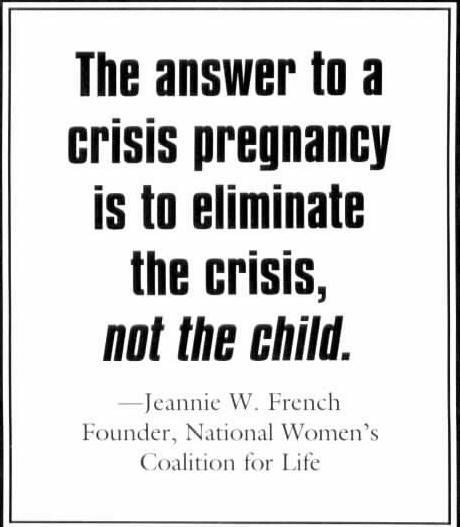 Let’s get real. As much as the pro-abortion crowd likes to belly-ache about situations like rape, incest, or saving the life of the mother, few abortions are actually performed for those reasons. Most abortions are performed for convenience. An unexpected pregnancy might be detrimental to the plans of the woman and/or man who would be the parents of the resulting child, so they kill the child. It’s as simple as that.
Or the child is the wrong sex.
Or the child has a deformity or has the markers for a mental handicap.
This means that most women who have abortions are doing so out of selfish reasons.
An old episode of He-man and the Masters of the Universe illustrated this exact situation, with fantasy elements (of course). In this episode, Skeletor (the villain) has learned the location of the Starseed. This artifact is a piece of the singularity that resulted in the Big Bang — and whoever possesses it has the power of God. Total omniscience along with omnipotence.
Let’s see what happens when He-man and Skeletor battle to possess it:
Do you agree that He-man made the correct decision?
Holding the power of life and death over another person in your hand and not using it is far more powerful than using it. In the cartoon here, as well as in real life, holding someone’s life in your hands and ending it is always an evil act.
Reality check for my fellow pro-lifers: Our side makes a big deal about electing only pro-life officials to Congress or the Presidency, over getting the right mix of Justices in the Supreme Court to overthrow Roe v. Wade. The government isn’t where we are going to win the battle, nor where we are going to make the greatest impact. It is with this power of choice.
The powerful testament to He-man’s character in that clip comes from the fact that he has the power to obliterate Skeletor, but he chooses not to. For all his evil scheming, Skeletor surely deserves nothing less than annihilation. However, He-man chooses to preserve Skeletor’s life — and when faced with the chance to kill his greatest enemy he reacts with mercy and forgiveness.
As Zodac points out, He-man’s refusal to use the power of the universe for selfish gain demonstrated his goodness.
Pregnancy is a responsibility handed to the pregnant woman by God, and abortion is the coward’s way to duck that responsibility. How much of a testament to a woman’s character would it be if she were in dire straits, became pregnant, had the option of aborting the child, yet still chose life for her unborn child?
The battle for abortion won’t be won in sweeping, preventative legislation. It will be won in the trenches with individual women, one choice by life-affirming choice at a time.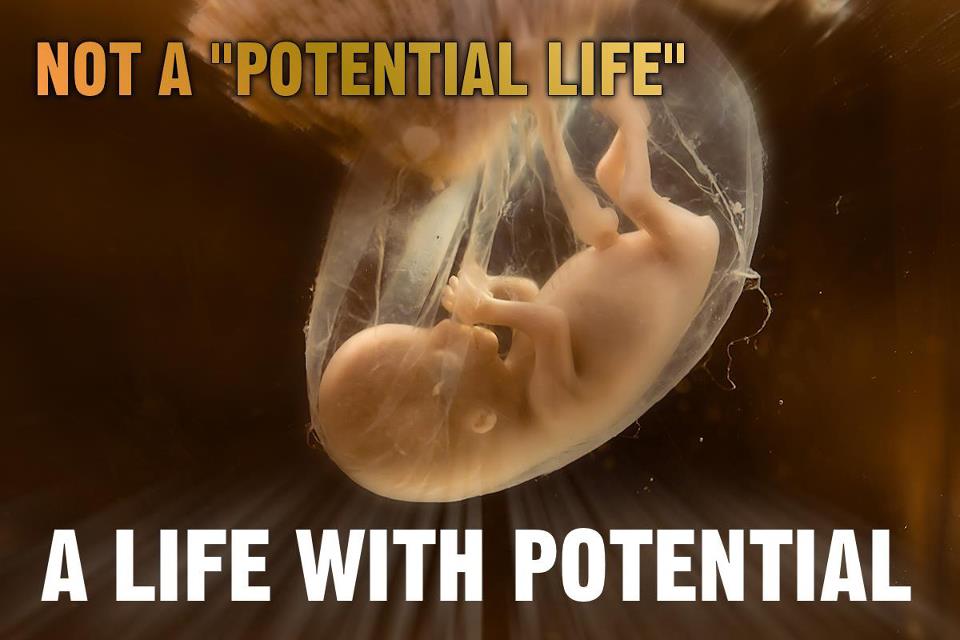
Contradiction Tuesday: Jesus in the Pecking Order
Better late than never, right?
I skipped the next contradiction in line. It’s easy to resolve, but I’m saving it for Easter.
So for today’s contradiction Tuesday, we have another both/and resolution.
I and my Father are one. (Jn 10:30)
set against
Ye have heard how I said unto you, I go away, and come again unto you. If ye loved me, ye would rejoice, because I said, I go unto the Father: for my Father is greater than I. (Jn 14:28)
The Trinity is the most misunderstood doctrine of Christianity. Atheistic challenges to it amount to little more than “I don’t understand the Trinity, so it must be false. Now I shall mock it to appear clever.”
Jesus and the Father share an essence. But they do not share an identity. Meaning they are ontologically the same, but still separate people. John 10:30 refers to sharing the essence, while the pecking order established by 14:38 refers to the separate persons.
Scripture Saturday: Why Some View God as a Moral Monster (Prv 28:5)
So far, I’ve been on time with Contradiction Tuesday, but late with Scripture Saturday. Every single time.
This new job has really cut into my blogging time!
Not that I’m complaining, mind you. After all, I need the money. And, for the first time since I can remember, I actually like my job.
Now on to Scripture Saturday.
Many atheists argue that God is a moral monster. They say that he has appalling standards compared to us humans.
Have you ever wondered why this is so? Why do atheists think God is evil for punishing sinful people (like the Canaanites)? Or why do they think he is a bumbling moron for allowing the Fall or creating Satan?
Simple. Atheism isn’t just a rejection of the concept of a deity. It is a decision with a serious moral dimension, and terrible consequences for the atheist — and I’m not referring to hell. I’m referring only to earthly consequences, especially in the way one thinks as an atheist. Let’s look at the Scriptures:
Evil men do not understand justice, but those who seek the LORD understand it completely. (Prv 28:5)
Are atheists evil? Maybe some are. Most aren’t by human standards. But by divine standards, they are as messed up as the rest of us (Rom 3:23). The bigger picture is the second clause — people who seek the Lord understand justice.
Without seeking God first, perfect and flawless justice will mean nothing.
The atheist can hem and haw all he wants about how he sought God and there was no God to be found. Balderdash. He fails to understand true justice because he is not seeking God.
Therefore, God’s actions against people like the Canaanites seem to the atheist inexplicable and mysterious; evil or disgusting. The atheist isn’t seeking God when examining the Bible, he’s really just window shopping “the god of some other religion” and comparing its actions with what he already believes morality to look like. He finds this god as coming up short, and therefore Christianity is yet another religion that fails to meet his criteria.
No wonder he doesn’t believe in God.
Instead, reverse all that. Let God set the bar, since God is (after all) God. Then measure yourself by his standard.
What’s happening, according to Scripture, is that since the atheist is not seeking God, he cannot understand justice.
Contradiction Tuesday: Is God a God of War or Peace?
God is often cited as the God of peace, for example:
Now the God of peace be with you all. Amen. (Rom 15:33)
However, the Bible also describes God in terms related to battle:
The LORD is a man of war: the LORD is his name. (Ex 15:3)
So, “Which is it?” asks Jim Merrit.
Why not both?
Humans are made in the image of God. Humans are dynamic. Humans don’t act the same way in every circumstance. We adapt. So why can’t the One in whose image we are made not adopt a different approach based on the circumstances?
It’s ludicrous to reduce God to a one-dimensional construct who can’t act on a case-by-case basis. Christians do this with God’s love, assuming God loves everyone the same and in equal measure — and that leads to the absurd notion that God couldn’t get mad at someone or that he won’t judge people and that everyone will end up in heaven by his side.
The truth is that God is more complex than we are in his behavior and his character. God loves us all, but in different ways. For example, you don’t love everyone in your own life in equal measure. Many people might let you down or disappoint you, and that changes the way that you feel about them.
And so it is with God.
When the circumstances call for God to be a God of peace, he is. When circumstances call for God to be a man of war, he is. Same God, but acting differently in different circumstances.
Contradiction Tuesday: Is God Good to All, or a Few?
Today, we introduce the second feature new to Josiah Concept Ministries: Contradiction Tuesday. Each Tuesday, I will discuss an alleged contradiction in the Bible and why it is not, in fact, a contradiction.
Barring specific reader requests, I’m working off of Jim Merrit’s list of biblical contradictions from the Secular Web. I’ll start at the top and work my way down. No skipping.
So, unless I specify that Contradiction Tuesday comes from X or Y reader, then assume I am continuing with Merrit’s list.
Yesterday, I explained why Merrit’s rebuttals to specific replies are silly. Now, let’s look at a specific contradiction and see if it really is a contradiction:
The LORD is good to all, and his mercy is over all that he has made. (Ps 145:9)
versus
And I will dash them one against another, fathers and sons together, declares the LORD. I will not pity or spare or have compassion, that I should not destroy them. (Jer 13:14)
Let’s first hammer out “good.”
The objection centers on the unspoken contention that punishment is bad, and if God punishes someone then God is not good.
But that’s ludicrous.
When God tells Abraham of the impending destruction of Sodom, what does Abraham object to? Not to the destruction of the city. Not to the punishment of the sinners in it (it’s already established that Sodom is wicked; see Gen 13:13). Abraham objected to the punishment of innocents, challenging God rhetorically: “Will you indeed sweep away the righteous with the wicked?” (Gen 18:23).
God is, in fact, good to everyone regardless if they happen to deserve his goodness. Let’s look at a couple of examples, starting with Job’s astute observation that God does allow evildoers to flourish:
Why do the wicked live, reach old age, and grow mighty in power? Their offspring are established in their presence, and their descendants before their eyes. Their houses are safe from fear, and no rod of God is upon them. Their bull breeds without fail; their cow calves and does not miscarry. They send out their little boys like a flock, and their children dance. They sing to the tambourine and the lyre and rejoice to the sound of the pipe. They spend their days in prosperity, and in peace they go down to Sheol. (Job 21:7-13)
Jesus confirms: “For [God] makes his sun rise on the evil and on the good, and sends rain on the just and on the unjust” (Mt 5:45), the context of that making it clear that it is good in the eyes of God to treat all with the same respect and impartiality (as he does).
Therefore, God is good to all — whether they accept or reject him. He prospers the wicked, as Job laments, and he allows all to enjoy the fruits of this world.
Somehow, in the eyes of the skeptic, God eventually punishing these wicked is not considered “good.”
On what planet?
Does that mean that if a human judge repeatedly lets murders and rapists go free without prison time that he is “good?” I’d hardly say so. I’d think that he’s apathetic, and so would any of these skeptics. Somehow, when God executes justice on the unholy, the skeptics think that he is a big meaniehead, but when a human judge is tough and ruthless to deserving individuals he is lauded as just.
Double standard.

And Now the Double Standard
Tuesday, I posted that truth is not relative. Truth is truth, and if it’s the truth, it isn’t going to go back and reverse itself, as science so often does.
I spotlighted 5 things I was taught in elementary school science class as irrefutable fact, all of which are now considered false. At the end of the post, I stated that I already knew the reply to this and I agreed with it. I posted the reply on Wednesday.
Science is great at discerning cause-and-effect, but I’m not so sure that I’d classify the findings as “irrefutable truth.” Our knowledge base is growing rapidly, and so we will find out that we occasionally missed the mark with previously held scientific theories.
Considering the vastness of the universe, the average scientist is likely formulating theories with 10% of the necessary data. We expect to revise theories as more data become available. With that in mind, those five points I made become simplistic and silly.
Now then, why does that create a double standard for theists?
Because our critics expect us to be right from the outset and never change. However, when I criticize science for reversing itself, I’m rightly called ignorant. I’m making an overly simplistic statement that totally misses the mark.
By the same token, as more information becomes available, people revise their opinions and theologies.
For example, despite Matthew Bellasario’s bellowing, the early church did not accord Mary the special place that Catholic theology does. They brought Mary into their liturgies because they felt that she deserved a place on account of her role in Jesus’ life, which eventually evolved to a Co-Redemptrix and Mediatrix of All Graces role. Catholics pay her hyper-dulia, a high accord indeed (higher than the saints, but lower than God).
One can even see evolving theology in the New Testament. The letter to the Hebrews was likely the latest document prepared, and it is rich in theology. The Gospel of John was the last of the Gospels and (again) it is rich in theology not present in the earlier Gospels. We can deduce John’s theology from the earlier Gospels and Paul’s letters, but it isn’t codified in either.
The Trinity was codified in the Athanasian Creed, the third of the three ecumenical creeds generally agreed upon by all Christians. We see an evolution in the Apostle’s Creed, the Nicene Creed, and finally the Athanasian Creed — each becomes more intricate as we gain greater insight and understanding.
Why, according to the critic, must all Christian belief be found all at once and never change; a progressive evolution indicates falsehood? I don’t discount science as false merely because scientists revise their findings later. Therefore, theology shouldn’t be discounted as false merely because we have revised it as time went on. All of the revisions were made for good reasons, like the revisions to various scientific theories.
One thing hasn’t changed: Salvation by the grace of God, effected by our faith in the finished work of Jesus Christ. Catholic, Orthodox, Protestant: we all unite under that banner.
And now you may comment on the entire series.
Why Yesterday’s Post Was (Only Partly) WRONG
I meant to post this a couple of hours ago, but life sometimes gets in the way. I had a lot of work to do around the house.
Yesterday, I posted that truth is not relative. Truth is truth, and if it’s the truth, it isn’t going to go back and reverse itself, as science so often does.
I spotlighted 5 things I was taught in elementary school science class as irrefutable fact, all of which are now considered false. So much for irrefutable scientific fact, right?
At the end of the post, I stated that I already knew the reply to this and I agreed with it. So let’s discuss that reply.
Science is great at discerning cause-and-effect, but I’m not so sure that I’d classify the findings as “irrefutable truth.” Ever. Which means that we are going to expect to find things we previously established through the scientific method to be false, because we might not have the entire picture.
It means our knowledge base is growing — more rapidly now than ever before — and so we will find out that we occasionally missed the mark with previously held scientific theories.
When a new CEO walks into a company, he can’t find everything out about everything in the company before he starts making decisions and changing the company around. At best, he will make decisions with 70% of the data he needs.
Considering the vastness of the universe, the average scientist is likely formulating theories with 10% of the necessary data.
So that science is wrong isn’t a problem. We expect to revise theories as more data become available.
With that in mind, those specific points I made become simplistic and silly.
Nothing ever suggested that the speed of light was the maximum attainable speed. It looked that way for a long time. Though we were confident in that conclusion, the universe is still quite mysterious to us and therefore finding something that moves faster than light should be exciting rather than garnering an “I told you so.”
If it’s possible to break the light barrier, then interstellar travel becomes a distinct possibility, and that would be cool.
The senses by which we perceive the world are varied, and scientists don’t officially agree on how many we have. The do agree on the core five of touch, taste, smell, sight, and hearing. So it’s too simple to just say, “I learned about five senses, now there’s more? Scientists are wrong!” It’s more along the lines of discovering new ways we perceive the world. Again, excitement and wonder should be the response, not “I told you so.”
Similarly, “planet” is a category that was never defined. Now it is. Pluto is no longer a planet and four asteroids are no longer asteroids because of semantics. Changing these definitions was necessary because the solar system is far more complex than we thought it was. After all, it’s weird to have moons larger than Mercury and asteroids roughly comparable to Pluto. Even Pluto’s own moon is roughly the same size as its parent.
Revised definitions help keep things more consistent.
The brain is more complex than a Cray supercomputer and is far more compact. It’s faster with its computations and it controls the body so seamlessly we barely know it’s there.
So it was overly simplistic of the scientists to ever postulate that the left hemisphere is cold logic and the right hemisphere is creativity.
Finally, I have no idea where that taste bud diagram ever came from. I knew that was false the first time I saw it, because I tried liking an ice cream cone with different parts of the tongue. I tasted it just fine. For some reason, my teachers all tried to defend the diagram, but I think privately every student in that room knew better.
Revising conclusions in the face of new data is a staple of science, and I agree it is a valid reply to my over-simplified statements yesterday. However, this is a serious double standard toward theism, and tomorrow I will explain why. Then, you will be able to comment!
5 Truths I Learned in Science Class that are Now WRONG
Truth corresponds to reality. This means that truth doesn’t change. If it was true in 4000 b.c., it is still true now.
Atheists frequently insist that only science can discover the truth.
If truth is truth, then that means if a truth is uncovered by science, then it’s always true, right?
Nope.
Allow me to present 5 truths taught to me in grade school science class that have been proven wrong. Read the rest of this entry
What is True Christianity(tm)? (part 3)
In part 1, I talked about how skeptics and atheists often complain when I (or another apologist) make the comment that such-and-so Christian is wrong. The skeptic usually says it means I have found “True Christianity™” and every other Christian who disagrees is going to go to hell.
Not so. And there’s no such thing as True Christianity™.
In part 2, I discussed degrees of wrong, using a traffic light as a guide. Green light is 99% of Christianity; just denominations hashing out some differences of procedure. Yellow light redefines core doctrines. Red light denies core doctrines and is strongly associated with a central figure who receives his own divine revelations.
Paul talks about agreeing to disagree, to welcome everyone and to not make the work of God void over what we should eat and drink. So can we ever fight for the faith?
In green light situations, there is no reason to fight. My own denomination is the United States branch of a German group, so it isn’t its own denomination proper. However, we’ve split twice in the last 30 years. In the mid-80s, Grace College and Ashland College split over the classic Calvinism (Ashland) versus Arminianism (Grace) battle. In the early 90s, a Grace professor split over who to welcome into churches.
These aren’t worthwhile fights, but I know they happen anyway and will continue to happen until Christ returns. We should just let these green light situations be, and live as peaceably as possible with them as it depends on us.
Yellow light and red light situations are totally different.
In the case of Ergun Caner, an example of a yellow light situation, it kills me to see Christians not care that he lied about his background to win Muslims to Christ. All these Christians care about is that Caner won them. What does that say about their moral character if they are willing to excuse (I can’t believe I’m about to use this derided expression) lying for Jesus?
The ends do not justify the means. I know that God has called Christians to a higher standard than that. Which means that we should win people with the truth to the Way, the Truth, and the Life. And when we see lying like this, we should repudiate it and the supporters of it (I’m looking at you, Norm Geisler).
A bona fide red light situation, such as Harold Camping’s Family Radio, should be addressed expeditiously. Today, October 21, is allegedly the end of the world according to Harold Camping. Yet I’m here to write this and I presume someone is reading this.
Camping and his Family Radio movement deny the presence of the Holy Spirit within the universal church and have fixed today somewhat arbitrarily as the end of the world. That, together with the strong association with Camping, gives this the earmarks of heresy outlined in my previous post.
This error needs to be addressed, and Camping called to repentance. (I already did back in May.)
I hope that this series of posts have cleared up what True Christianity™ is, and is not. God has promised to preserve his church on earth, and the gates of hell will not prevail against it. So whether we identify as Catholic, Methodist, Baptist, Episcopal, Presbyterian, Reformed Baptist, Grace Brethren, or Anglican, we should welcome each other with open arms in our churches and celebrate our differences rather than be divided by them.
When redefinition occurs, we should point it out.
When denial occurs, we should repudiate it.
Above all, we should join with Jesus in prayer that we be one, as he and the Father are One.


 Back Rome Again