Category Archives: Religion
Reductio Ad Absurdum
I’m going to pick on BibleAlsoSays, Twitter phenom, one more time tonight then I am going to bed.
Though I know that what I’m about to do commits the same fallacy, allow me to do it anyway:
https://twitter.com/#!/BibleAlsoSays/status/159482750057988096
Which, apparently, means that we should close every school. Because they inculcate our kids with math, science, history, language arts, and other truth. If it was true, it wouldn’t require so much inculcation, after all!
Okay, now that I’m done engaging in reductio ad absurdum, let’s unpack this a little bit better.
We need to look at inculcation. According to dictionary.com:
[T]he act of inculcating, or teaching or influencing repeatedly or persistently and repeatedly so as to implant or instill an idea, theory, attitude, etc. (source)
I fail to see why religion is wrong for doing that. Ever been to school? They drill math into your head, make you memorize dates in history, practice handwriting the same letters again and again; and frequently you are penalized for creativity or outside-the-box thinking.
I remember once I wrote a poem about the sunrise in English class. I tried to coin a word, which poetry is the medium for doing that. I got marked off for it!
This tweet fails as an argument against religion because it commits a category error. It assumes religion is self-evident truth.
There are truths that are self-evident, such as 2 + 2 = 4. No argument. A baby can see that if you take two walnuts, and put two more walnuts with it, you will have four walnuts.
On the other hand, a claim like E = mc2 requires a defense, or a persistent (and perhaps in-your-face) teaching or influencing to implant the theory. Matter is really energy? It defies casual observation. Yet, upon much, much, much examination and experimentation it does wind up being true.
Religion, or more specifically religious concepts, are not necessarily self-evident. The existence of God, I think, is self-evident. But that fact alone becomes a war of semantics to define God. Which god really exists, therefore, is not self-evident.
The deity of Christ is also not self-evident. It must be examined and wrestled with, as scientists did for years with E = mc2.
There is no education required for self-evident truth. However, there is much required for more subtle truths, and the truth of the Christian religion is one such subtlety that requires both a solid education and a firm defense.
Twittering Away at Philosophical Naivety
I’ve addressed philosophically naive statements before. They always seem to come from Twitter, which is why I had to absolutely laugh at the recent issue of Writer’s Digest when it suggests writing dialogue in Twitterspeak (140 characters or less) as an exercise in creativity.
Sure. That might work for a good writer, but not for Average Joe Twitterhead.
Enter BibleAlsoSays, a frequent contributor to mass ignorance. He has struck again with two statements. First:
https://twitter.com/#!/BibleAlsoSays/status/159474512163897344
Then:
https://twitter.com/#!/BibleAlsoSays/status/159474546288762881
Well, let’s break this down a little bit.
First, BAS is operating from a faulty definition of the word “faith.” Faith is not “belief without evidence,” but loyalty based on prior performance. That loyalty is manifested in the actions of the believer; which means both belief and practice are required for a truly biblical faith.
We see now that BAS’s statement misses the mark entirely. I take ownership of my faith by my actions, regardless of who passed the knowledge to me. My wife brought me to faith through seeds planted years earlier by my grandpa, and the church, the Bible, and influences too numerous to name have taught me what it means to own the faith I was given.
My actions — primarily through my writing, but also through a local youth ministry co-op and by assisting in the presentation of church services — have made my faith my own.
Second, even if we allow for BAS’s faulty definition of “faith,” he’s still off-base. Taking ownership of abstract ideals is the same as taking ownership of concrete objects.
The computer I’m typing this on is a perfect example, as it came from my church. I didn’t build this computer, I didn’t load the original software on it, and I didn’t use it for the first few years of its existence. The Dell factory built it, loaded the software, and shipped it to my church, where it sat on the secretary’s desk for a few years. They sold it to my father-in-law, who then gave it to my wife and I after he realized that he didn’t need it.
I didn’t build it. I didn’t use it at first. But it is my computer now. It served many before me, now it serves me.
Same with a belief. It becomes my belief when someone shares it with me, and I accept it as true. So it is now mine in a sense, yet it still resides with the original person — the advantage abstract ideals have over physical objects.
A belief is never really “owned” by anyone. Rather, it is shared by a group of like-minded people.
A belief will pass from one to another, from generation to generation. Each generation is free to question and discard it. Religion is not immune to this — in fact, the growing number of nonreligious is testament to the fact that many do question religious belief and eventually discard it.
But to say that no one can take ownership of a religious belief because it was passed from parent to child is philosophically naive. No belief is really one’s own, since all or most of our most fervently held beliefs were taught to us by someone at some point.
Yet, despite this, people take ownership of beliefs all the time. And we let them, never questioning the source of the belief. If I say, for example, that I believe Mercury is the first planet from the sun, no one scolds me by saying, “You discover that yourself, there, Copernicus?”
Whoever discovered it, it was taught to me by a science teacher and is my belief now.
Religious belief is not in a special category by itself. What applies to it applies to every belief under the sun — though I much doubt BAS wants that to be true. His hatred of religion blinds him to a lot of philosophical truth. In sum, if faith is solely equal to belief, we can still claim it as our own in the same semantic sense we claim any belief our own despite it being part of a collective body knowledge that we did not personally discover.
Scripture Saturday: Importance of Bible Study (Prv 28:9)
I’ve heard that some folks benefit from a regimented blogging schedule, so I thought I’d give it a shot to see if it helps me. And that means I will now introduce two new features. If I blog nothing else in the course of a week, I will blog the two features.
The first is Contradiction Tuesday, where I will detail a perceived contradiction in the Bible. I’ll take requests for this series from skeptics and believers alike — e-mail me. It will begin next Tuesday; I didn’t have time to do one this week.
On a side note, I’m thinking of adding Anti-Testimony Wednesday sometime in the future. I would critique the latest “Why I’m not a Christian” bit from ex-Christian.net, with a private offer to the poster to defend him or herself here. Since they don’t like their unbelief challenged on the site, this would be playing by their rules. After all, the anti-testimony is posted publicly so it’s unrealistic to think that someone won’t pick it up and challenge it somewhere.
The series beginning today is Scripture Saturday. What better way to kick off Scripture Saturday than with a verse on the importance of studying Scripture?
If one turns away his ear from hearing the law, even his prayer is an abomination. (Prv 28:9)
Strongly worded. If a person stops studying God’s Law, then that person’s prayer is an abomination. An abomination! That’s the strongest way God can revile something. And here, God is saying that he will revile a person’s prayers if that person refuses to hear God! Read the rest of this entry
Freedom of Speech
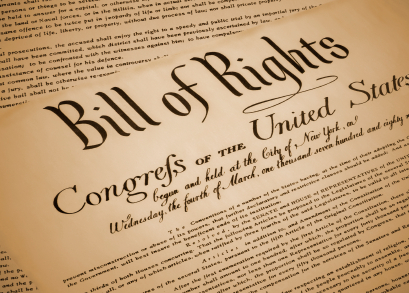 As far back as high school, I often lamented that some folks read the First Amendment to say “Freedom of speech until you offend me, then I’ll sue your sorry butt.”
I wasn’t concerned with a Christian audience that might abhor profanity, so when I said it back in high school and college, I didn’t use the term “butt.”
The point still stands, and I see it more clearly than I ever did at 17. There is a tide of public opinion now that values tolerance and diversity, except for some people. “Tolerance” isn’t selective by nature, but secularists tolerate views selectively.
Recently, a Christian in the UK was demoted for expressing his opinion that gays shouldn’t be allowed to marry. He did so on his own time, and on his personal Facebook page which is only open to his friends.
Now, legally speaking, regardless of privacy settings, there is no expectation of privacy on Facebook or Twitter. I know this and I’m not going to argue otherwise. But the comment on this story from Natalie sums up exactly what is wrong with the secular viewpoint:
No one limits the rights for private worship, promotion of christian beliefs in the private sphere. However, internet, blogs, facebook and twitter are all public domains. As a public servant, a representative of an actively secular institution- secular by the law of the land, no one should not publicly publish promotion of religious opinions and values in the public arena. No one ought to utilise public assets or services to promote religious views. This is a great aspect of freedom in western democracies and ought to be defended down to the smallest detail. The public servants were correct to chastise Christians for promoting their faith using public assets and in public spaces.
So, basically, once you can read it, it shouldn’t be allowed. Like I’ve always said, “You have freedom of speech until it offends me.”
While I agree that the Internet and everything on it is public, this man is still entitled to his opinion and should be able to express it in a public forum, as Natalie may express hers. Regardless of agreement.
I will argue with atheists. I will challenge their points, views, biblical exegesis, and conclusions. But I will never say that they don’t have the right to express their views in a public forum. That’s precisely why the forum is public — so that differing opinions may be hashed out, challenged, and thought through. Public means open to all.
Not being allowed to express religious opinions isn’t “freedom of speech” by any definition I can find. It’s totalitarian oppression. I know that my religious opinion has no value in secular mindsets. But, I ignore opinions of no value. Secularists don’t return the favor — they try to suppress my opinion. Why? That doesn’t make any sense.
Natalie’s promoting the evil she allegedly repudiates, though I doubt she sees it that way. That’s actually the saddest part to all of this. Christians have as much right to the Internet as atheists. We just haven’t been as smart about using it.
God Commanded Terrible Stuff!
In regard to God defining morality (part of a reply to this post), Alex wrote:
Right, so I guess then that slavery is fine, that homosexuals should be killed, that it’s ok to kill people who pick up sticks on a Saturday or Sunday, that child sacrificing is perfectly fine, that a tooth for a tooth is perfectly fine and on and on?
This has all been answered before, so here’s the round-up of replies:
- No, slavery is not okay. Check Glenn Miller, too.
- No, we are not going to kill gay people and Sabbath-breakers. I’ve talked about the church’s shoddy treatment of gays before, actually!
- No, the Bible does not condone child sacrifice. J.P. Holding weighs in. With a cartoon, too!
- “Eye-for-an-eye” laws were more complex than just that (rebuttal, cross-ex, Paul Copan weighs in).
Amazingly, no mention of God commanding genocide. That’s the only atheist talking point missing from Alex’s short list.
Hopefully, I won’t have to answer any of these charges again, but I kind of doubt it. All of these are atheist favorites, despite repeated correction by many, many Christian apologists. I’m sure we’ll keep seeing these brought up over and over again, until Christ’s triumphant return.
What is True Christianity(tm)? (part 3)
In part 1, I talked about how skeptics and atheists often complain when I (or another apologist) make the comment that such-and-so Christian is wrong. The skeptic usually says it means I have found “True Christianity™” and every other Christian who disagrees is going to go to hell.
Not so. And there’s no such thing as True Christianity™.
In part 2, I discussed degrees of wrong, using a traffic light as a guide. Green light is 99% of Christianity; just denominations hashing out some differences of procedure. Yellow light redefines core doctrines. Red light denies core doctrines and is strongly associated with a central figure who receives his own divine revelations.
Paul talks about agreeing to disagree, to welcome everyone and to not make the work of God void over what we should eat and drink. So can we ever fight for the faith?
In green light situations, there is no reason to fight. My own denomination is the United States branch of a German group, so it isn’t its own denomination proper. However, we’ve split twice in the last 30 years. In the mid-80s, Grace College and Ashland College split over the classic Calvinism (Ashland) versus Arminianism (Grace) battle. In the early 90s, a Grace professor split over who to welcome into churches.
These aren’t worthwhile fights, but I know they happen anyway and will continue to happen until Christ returns. We should just let these green light situations be, and live as peaceably as possible with them as it depends on us.
Yellow light and red light situations are totally different.
In the case of Ergun Caner, an example of a yellow light situation, it kills me to see Christians not care that he lied about his background to win Muslims to Christ. All these Christians care about is that Caner won them. What does that say about their moral character if they are willing to excuse (I can’t believe I’m about to use this derided expression) lying for Jesus?
The ends do not justify the means. I know that God has called Christians to a higher standard than that. Which means that we should win people with the truth to the Way, the Truth, and the Life. And when we see lying like this, we should repudiate it and the supporters of it (I’m looking at you, Norm Geisler).
A bona fide red light situation, such as Harold Camping’s Family Radio, should be addressed expeditiously. Today, October 21, is allegedly the end of the world according to Harold Camping. Yet I’m here to write this and I presume someone is reading this.
Camping and his Family Radio movement deny the presence of the Holy Spirit within the universal church and have fixed today somewhat arbitrarily as the end of the world. That, together with the strong association with Camping, gives this the earmarks of heresy outlined in my previous post.
This error needs to be addressed, and Camping called to repentance. (I already did back in May.)
I hope that this series of posts have cleared up what True Christianity™ is, and is not. God has promised to preserve his church on earth, and the gates of hell will not prevail against it. So whether we identify as Catholic, Methodist, Baptist, Episcopal, Presbyterian, Reformed Baptist, Grace Brethren, or Anglican, we should welcome each other with open arms in our churches and celebrate our differences rather than be divided by them.
When redefinition occurs, we should point it out.
When denial occurs, we should repudiate it.
Above all, we should join with Jesus in prayer that we be one, as he and the Father are One.
What is True Christianity(tm)? (part 2)
I did part 1 of this a long, long, time ago but never quite got to part 2.
In the last post, I basically said that we should bow to the weaker brother and let him have his ritual. If he thinks that we must be baptized by triune immersion in a lake, then let him get baptized that way. If he thinks all Christians should abstain from alcohol, then don’t crack open an ice-cold Corona with a lime wedge in front of him.
In the non-essentials of faith, let the weaker brother abstain. Don’t try to talk him out of it. Don’t insist on giving him a glass of wine, stay clear of it in front of him as well. Don’t force him to use a baptismal, offer to drive him to a lake yourself.
But, there are times when you have to come after fellow Christians and tell them they are wrong.
For example, in my extended review of John Shelby Spong’s Sins of Scripture (part 1, part 2, part 3, part 4, part 5, part 6, part 7), I handed the good bishop his butt. I fought for the traditional deposit of faith, above Spong’s redefinition of all the terms. I did that because, as James White often says, the gospel is ours to proclaim, not to edit. Spong completely changes what it means to be a Christian, and how a Christian ought to approach the Scriptures.
Spong basically denies every fundamental of the faith that I listed in the previous post, to wit:
- Existence of God as a Trinity
- Preeminence of Christ over his creation
- Mankind fell into sin, and is now utterly enslaved to it
- Death of Jesus making atonement for the sins of mankind
- Resurrection of Jesus on the third day
- Future return of Christ to judge the living and the dead
Currently, a Christian is doing this same thing to me, here. I might be wrong, because I’m not infallible. I believe that faith is more than belief, that it is also good works. In other words, faith is loyalty to God manifested by both belief and good works. Mike, however, doesn’t think so. We are both trying to come to some sort of common ground with each other.
Which raises the question: When do I get to call an error “error?”
I think there are three categories of theological error. Let’s discuss them. Read the rest of this entry
What is True Christianity(tm)? (part 1)
It keeps coming up in discussions with atheists that I say certain Christians are wrong about particulars of Christianity. And they are. If I’m right on certain things (which I think I am), then necessarily others who disagree with me are wrong. Not a radical notion.
What do you suppose happens when I call a Christian’s particular doctrine into question? I always get the same response from the atheist. He sarcastically tells me that I believe I’m the only one who has found True Christianity™ and that I believe every other Christian will burn, just like every other Christian he has spoken to, because believers are all that arrogant.
I think that is more evidence of the shallow thinking of the atheist, not to mention their complete ignorance of theology. Atheists, I’m going to make this as plain as I possibly can: There is no such thing as True Christianity™! Read the rest of this entry
Sidebar: The 38,000 Denominations Argument
We interrupt this ongoing series on Catholicism to bring you a special bulletin, hopefully clarifying something I said in a previous post before some sarcastically impaired person tries to use it against me.
In this post, I stated:
Without submission to the church as a teacher, you have no other way to go other than to split into a separate body of believers with no further fellowship when a disagreement arises. And there are 38,000 recognized denominations of Christianity proving my point!
Of course, this argument is frequently used by atheists to suggest that there is extreme disunity in Christianity. It’s also used by Catholics to show the need for a central teaching authority.
Here, I was using it flippantly the same way as a Catholic, to highlight the need for a high church concept and for the body of believers to submit to their local church. I don’t believe in “church shopping” if you don’t like where you currently attend. And I hate the fact that people create new denominations on a whim, and sometimes over the most trivial points.
I have often argued that there is more unity in Christianity than disunity, with varying opinions on side issues or non-issues. I’m not going back on that by making the statement I did, and was reminded this morning that the issue is much more complicated than just a few differences of opinion. This video from JP Holding does an excellent (and humorous job) of showing the differences in the various denominations:
Denominations are most often formed to serve the unique needs of a specific geographic area. For example, I’ve often talked about being a member of a Grace Brethren church. The doctrine comes from the Schwarzenau Brethren (the “German Dunkers”), and was renamed “Grace Brethren” in the United States. We have no doctrine that is distinct from the original denomination, just a different name for a different geographic region.
The Anglican Church in the United States is called the Episcopal Church. Why? Well, “Anglican” is the Church of England, and probably wouldn’t have been a popular name to go by after this tiny, little row called “the American Revolution.” Perhaps you’ve heard of it. Anti-English sentiment would have run high in the new republic, so they changed their name.
Over time, the two churches have grown apart. Episcopal Churches, for example, celebrate homosexuality and bless gay marriages, ordain openly gay clergy and elect openly gay bishops, as well as allowing female pastors. None of that is condoned by the head of the Anglican Community, the Archbishop of Canterbury. He has, in fact, threatened to expel the Episcopal Church from the Anglican Community over these issues.
Despite the row, at the end of the day, the Episcopal Church is still part of the Anglican Church, just called a different name for a different region.
Geographic region is really the key to understanding denominations. Sometimes, it’s just easier to form a denomination than to answer to a larger authority who might not understand exactly what a particular church needs.
I just wanted to make it clear that I’m using the argument flippantly. I meant it as a humorous underscore to my point that people aren’t going to understand the Bible unaided, and that the Bible cannot be our sole authority. We need teachers to show us how to read the Bible. I’m not trying to suggest that 38,000 denominations is equivalent to 38,000 completely different and contradictory views of Christianity.


 Back Rome Again
Protestant Doctrines I Have Officially Abandoned
Sep 13
Posted by Cory Tucholski
I seek truth, and everyone who seeks truth must (if they intend to remain intellectually honest) reject beliefs if they find that those beliefs are untrue. Though I have previously defended these three distinctly Protestant doctrines, I can no longer do so. After much reflection, I believe they are false.
Read the rest of this entry →
Posted in Apologetics, Religion, Theology
17 Comments
Tags: bible commentaries, bible dictionaries, denominations, handbook of biblical social values, interpreting the bible, perspicuity of Scripture, Protestantism, Roman Catholicism, sola scriptura, sound theology