Category Archives: Apologetics

And Now the Double Standard
Tuesday, I posted that truth is not relative. Truth is truth, and if it’s the truth, it isn’t going to go back and reverse itself, as science so often does.
I spotlighted 5 things I was taught in elementary school science class as irrefutable fact, all of which are now considered false. At the end of the post, I stated that I already knew the reply to this and I agreed with it. I posted the reply on Wednesday.
Science is great at discerning cause-and-effect, but I’m not so sure that I’d classify the findings as “irrefutable truth.” Our knowledge base is growing rapidly, and so we will find out that we occasionally missed the mark with previously held scientific theories.
Considering the vastness of the universe, the average scientist is likely formulating theories with 10% of the necessary data. We expect to revise theories as more data become available. With that in mind, those five points I made become simplistic and silly.
Now then, why does that create a double standard for theists?
Because our critics expect us to be right from the outset and never change. However, when I criticize science for reversing itself, I’m rightly called ignorant. I’m making an overly simplistic statement that totally misses the mark.
By the same token, as more information becomes available, people revise their opinions and theologies.
For example, despite Matthew Bellasario’s bellowing, the early church did not accord Mary the special place that Catholic theology does. They brought Mary into their liturgies because they felt that she deserved a place on account of her role in Jesus’ life, which eventually evolved to a Co-Redemptrix and Mediatrix of All Graces role. Catholics pay her hyper-dulia, a high accord indeed (higher than the saints, but lower than God).
One can even see evolving theology in the New Testament. The letter to the Hebrews was likely the latest document prepared, and it is rich in theology. The Gospel of John was the last of the Gospels and (again) it is rich in theology not present in the earlier Gospels. We can deduce John’s theology from the earlier Gospels and Paul’s letters, but it isn’t codified in either.
The Trinity was codified in the Athanasian Creed, the third of the three ecumenical creeds generally agreed upon by all Christians. We see an evolution in the Apostle’s Creed, the Nicene Creed, and finally the Athanasian Creed — each becomes more intricate as we gain greater insight and understanding.
Why, according to the critic, must all Christian belief be found all at once and never change; a progressive evolution indicates falsehood? I don’t discount science as false merely because scientists revise their findings later. Therefore, theology shouldn’t be discounted as false merely because we have revised it as time went on. All of the revisions were made for good reasons, like the revisions to various scientific theories.
One thing hasn’t changed: Salvation by the grace of God, effected by our faith in the finished work of Jesus Christ. Catholic, Orthodox, Protestant: we all unite under that banner.
And now you may comment on the entire series.
Why Yesterday’s Post Was (Only Partly) WRONG
I meant to post this a couple of hours ago, but life sometimes gets in the way. I had a lot of work to do around the house.
Yesterday, I posted that truth is not relative. Truth is truth, and if it’s the truth, it isn’t going to go back and reverse itself, as science so often does.
I spotlighted 5 things I was taught in elementary school science class as irrefutable fact, all of which are now considered false. So much for irrefutable scientific fact, right?
At the end of the post, I stated that I already knew the reply to this and I agreed with it. So let’s discuss that reply.
Science is great at discerning cause-and-effect, but I’m not so sure that I’d classify the findings as “irrefutable truth.” Ever. Which means that we are going to expect to find things we previously established through the scientific method to be false, because we might not have the entire picture.
It means our knowledge base is growing — more rapidly now than ever before — and so we will find out that we occasionally missed the mark with previously held scientific theories.
When a new CEO walks into a company, he can’t find everything out about everything in the company before he starts making decisions and changing the company around. At best, he will make decisions with 70% of the data he needs.
Considering the vastness of the universe, the average scientist is likely formulating theories with 10% of the necessary data.
So that science is wrong isn’t a problem. We expect to revise theories as more data become available.
With that in mind, those specific points I made become simplistic and silly.
Nothing ever suggested that the speed of light was the maximum attainable speed. It looked that way for a long time. Though we were confident in that conclusion, the universe is still quite mysterious to us and therefore finding something that moves faster than light should be exciting rather than garnering an “I told you so.”
If it’s possible to break the light barrier, then interstellar travel becomes a distinct possibility, and that would be cool.
The senses by which we perceive the world are varied, and scientists don’t officially agree on how many we have. The do agree on the core five of touch, taste, smell, sight, and hearing. So it’s too simple to just say, “I learned about five senses, now there’s more? Scientists are wrong!” It’s more along the lines of discovering new ways we perceive the world. Again, excitement and wonder should be the response, not “I told you so.”
Similarly, “planet” is a category that was never defined. Now it is. Pluto is no longer a planet and four asteroids are no longer asteroids because of semantics. Changing these definitions was necessary because the solar system is far more complex than we thought it was. After all, it’s weird to have moons larger than Mercury and asteroids roughly comparable to Pluto. Even Pluto’s own moon is roughly the same size as its parent.
Revised definitions help keep things more consistent.
The brain is more complex than a Cray supercomputer and is far more compact. It’s faster with its computations and it controls the body so seamlessly we barely know it’s there.
So it was overly simplistic of the scientists to ever postulate that the left hemisphere is cold logic and the right hemisphere is creativity.
Finally, I have no idea where that taste bud diagram ever came from. I knew that was false the first time I saw it, because I tried liking an ice cream cone with different parts of the tongue. I tasted it just fine. For some reason, my teachers all tried to defend the diagram, but I think privately every student in that room knew better.
Revising conclusions in the face of new data is a staple of science, and I agree it is a valid reply to my over-simplified statements yesterday. However, this is a serious double standard toward theism, and tomorrow I will explain why. Then, you will be able to comment!
5 Truths I Learned in Science Class that are Now WRONG
Truth corresponds to reality. This means that truth doesn’t change. If it was true in 4000 b.c., it is still true now.
Atheists frequently insist that only science can discover the truth.
If truth is truth, then that means if a truth is uncovered by science, then it’s always true, right?
Nope.
Allow me to present 5 truths taught to me in grade school science class that have been proven wrong. Read the rest of this entry
Freedom of Speech
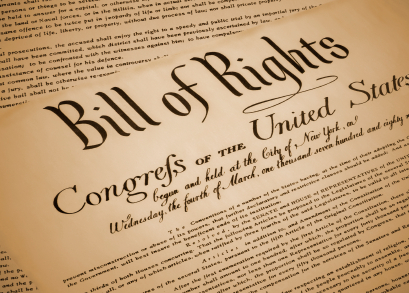 As far back as high school, I often lamented that some folks read the First Amendment to say “Freedom of speech until you offend me, then I’ll sue your sorry butt.”
I wasn’t concerned with a Christian audience that might abhor profanity, so when I said it back in high school and college, I didn’t use the term “butt.”
The point still stands, and I see it more clearly than I ever did at 17. There is a tide of public opinion now that values tolerance and diversity, except for some people. “Tolerance” isn’t selective by nature, but secularists tolerate views selectively.
Recently, a Christian in the UK was demoted for expressing his opinion that gays shouldn’t be allowed to marry. He did so on his own time, and on his personal Facebook page which is only open to his friends.
Now, legally speaking, regardless of privacy settings, there is no expectation of privacy on Facebook or Twitter. I know this and I’m not going to argue otherwise. But the comment on this story from Natalie sums up exactly what is wrong with the secular viewpoint:
No one limits the rights for private worship, promotion of christian beliefs in the private sphere. However, internet, blogs, facebook and twitter are all public domains. As a public servant, a representative of an actively secular institution- secular by the law of the land, no one should not publicly publish promotion of religious opinions and values in the public arena. No one ought to utilise public assets or services to promote religious views. This is a great aspect of freedom in western democracies and ought to be defended down to the smallest detail. The public servants were correct to chastise Christians for promoting their faith using public assets and in public spaces.
So, basically, once you can read it, it shouldn’t be allowed. Like I’ve always said, “You have freedom of speech until it offends me.”
While I agree that the Internet and everything on it is public, this man is still entitled to his opinion and should be able to express it in a public forum, as Natalie may express hers. Regardless of agreement.
I will argue with atheists. I will challenge their points, views, biblical exegesis, and conclusions. But I will never say that they don’t have the right to express their views in a public forum. That’s precisely why the forum is public — so that differing opinions may be hashed out, challenged, and thought through. Public means open to all.
Not being allowed to express religious opinions isn’t “freedom of speech” by any definition I can find. It’s totalitarian oppression. I know that my religious opinion has no value in secular mindsets. But, I ignore opinions of no value. Secularists don’t return the favor — they try to suppress my opinion. Why? That doesn’t make any sense.
Natalie’s promoting the evil she allegedly repudiates, though I doubt she sees it that way. That’s actually the saddest part to all of this. Christians have as much right to the Internet as atheists. We just haven’t been as smart about using it.
Fishing for Compliments
In his most recent post, John Loftus said, “In the sidebar it may look as if I think highly of myself.”
I stopped reading after that because I was laughing too hard. No, the appearance of John thinking highly of himself is not limited to the sidebar:
- Its [The Christian Delusion] content is so daring and controversial that a desperate and hostile response from defenders of the faith is inevitable. (source)
- Because of that book [Why I Became an Atheist] I was able to gather together some scholars to write chapters for The Christian Delusion: Why Faith Fails
which is helping to significantly change the religious landscape. (source)
- If you’re a Christian thinking about entering [an apologetics degree] program then simply ask them if they deal with my books. Any program worth it’s salt should do so. (emphasis in original, source)
- [The End of Christianity is] an excellent book, which combined with its predecessor (The Christian Delusion) makes a decisive refutation of the Christian religion. (source)
- Debating William Lane Craig: “What is Bill afraid of? He’s afraid of introducing me to his fan base. This is what I really think. He’s scared of me.” (emphasis in original, source)
And those are just a few examples. I know more exist. I believe the introduction to The End of Christianity contains a gem along the lines of “the gavel has come down, the case is closed, Christianity stands completely debunked.”
So John’s contention in that post that he isn’t now nor ever will be a celebrity is nothing more than false humility, the same sorts of mind games that insecure people fishing for compliments stoop to.
Suspicion Confirmed: Why America Loves to Hate Tim Tebow
I had always suspected that the reason that quarterback Tim Tebow seems to generate so much negativity is his Christianity.
And I’m not alone in suspecting that.
I didn’t see Tebow’s recent game against Miami. I have, however, seen Miami’s recent Monday Night outing and can tell you that beating Miami is not an achievement (apologies to my mother-in-law, but she knows it too!). Miami is absolutely horrible this year.
Worse, I understand Denver was behind the entire game, and Tebow only pulled it together in the last few minutes to send the game into OT.
So, you can hate Tim Tebow because he’s a mediocre quarterback. Fine. But there are plenty of mediocre quarterbacks in the NFL, why does Tebow draw so much more venom from fans and commentators?
Erik Manning, quoting George Weigel, put the problem into focus. Tim Tebow gets so much negativity because he wears his Christianity on his sleeve.
If Tim Tebow never put Bible verses on his eye black, never appeared in Super Bowl ads with a pro-life message, and never evangelized or went on mission trips, then he would draw the average amount of fire an in-over-his-head-in-the-NFL quarterback would typically see.
But his Christianity seems to triple the shots he takes in the media and from fans.
Christohobia at its finest.
God Commanded Terrible Stuff!
In regard to God defining morality (part of a reply to this post), Alex wrote:
Right, so I guess then that slavery is fine, that homosexuals should be killed, that it’s ok to kill people who pick up sticks on a Saturday or Sunday, that child sacrificing is perfectly fine, that a tooth for a tooth is perfectly fine and on and on?
This has all been answered before, so here’s the round-up of replies:
- No, slavery is not okay. Check Glenn Miller, too.
- No, we are not going to kill gay people and Sabbath-breakers. I’ve talked about the church’s shoddy treatment of gays before, actually!
- No, the Bible does not condone child sacrifice. J.P. Holding weighs in. With a cartoon, too!
- “Eye-for-an-eye” laws were more complex than just that (rebuttal, cross-ex, Paul Copan weighs in).
Amazingly, no mention of God commanding genocide. That’s the only atheist talking point missing from Alex’s short list.
Hopefully, I won’t have to answer any of these charges again, but I kind of doubt it. All of these are atheist favorites, despite repeated correction by many, many Christian apologists. I’m sure we’ll keep seeing these brought up over and over again, until Christ’s triumphant return.
What is True Christianity(tm)? (part 3)
In part 1, I talked about how skeptics and atheists often complain when I (or another apologist) make the comment that such-and-so Christian is wrong. The skeptic usually says it means I have found “True Christianity™” and every other Christian who disagrees is going to go to hell.
Not so. And there’s no such thing as True Christianity™.
In part 2, I discussed degrees of wrong, using a traffic light as a guide. Green light is 99% of Christianity; just denominations hashing out some differences of procedure. Yellow light redefines core doctrines. Red light denies core doctrines and is strongly associated with a central figure who receives his own divine revelations.
Paul talks about agreeing to disagree, to welcome everyone and to not make the work of God void over what we should eat and drink. So can we ever fight for the faith?
In green light situations, there is no reason to fight. My own denomination is the United States branch of a German group, so it isn’t its own denomination proper. However, we’ve split twice in the last 30 years. In the mid-80s, Grace College and Ashland College split over the classic Calvinism (Ashland) versus Arminianism (Grace) battle. In the early 90s, a Grace professor split over who to welcome into churches.
These aren’t worthwhile fights, but I know they happen anyway and will continue to happen until Christ returns. We should just let these green light situations be, and live as peaceably as possible with them as it depends on us.
Yellow light and red light situations are totally different.
In the case of Ergun Caner, an example of a yellow light situation, it kills me to see Christians not care that he lied about his background to win Muslims to Christ. All these Christians care about is that Caner won them. What does that say about their moral character if they are willing to excuse (I can’t believe I’m about to use this derided expression) lying for Jesus?
The ends do not justify the means. I know that God has called Christians to a higher standard than that. Which means that we should win people with the truth to the Way, the Truth, and the Life. And when we see lying like this, we should repudiate it and the supporters of it (I’m looking at you, Norm Geisler).
A bona fide red light situation, such as Harold Camping’s Family Radio, should be addressed expeditiously. Today, October 21, is allegedly the end of the world according to Harold Camping. Yet I’m here to write this and I presume someone is reading this.
Camping and his Family Radio movement deny the presence of the Holy Spirit within the universal church and have fixed today somewhat arbitrarily as the end of the world. That, together with the strong association with Camping, gives this the earmarks of heresy outlined in my previous post.
This error needs to be addressed, and Camping called to repentance. (I already did back in May.)
I hope that this series of posts have cleared up what True Christianity™ is, and is not. God has promised to preserve his church on earth, and the gates of hell will not prevail against it. So whether we identify as Catholic, Methodist, Baptist, Episcopal, Presbyterian, Reformed Baptist, Grace Brethren, or Anglican, we should welcome each other with open arms in our churches and celebrate our differences rather than be divided by them.
When redefinition occurs, we should point it out.
When denial occurs, we should repudiate it.
Above all, we should join with Jesus in prayer that we be one, as he and the Father are One.
What is True Christianity(tm)? (part 2)
I did part 1 of this a long, long, time ago but never quite got to part 2.
In the last post, I basically said that we should bow to the weaker brother and let him have his ritual. If he thinks that we must be baptized by triune immersion in a lake, then let him get baptized that way. If he thinks all Christians should abstain from alcohol, then don’t crack open an ice-cold Corona with a lime wedge in front of him.
In the non-essentials of faith, let the weaker brother abstain. Don’t try to talk him out of it. Don’t insist on giving him a glass of wine, stay clear of it in front of him as well. Don’t force him to use a baptismal, offer to drive him to a lake yourself.
But, there are times when you have to come after fellow Christians and tell them they are wrong.
For example, in my extended review of John Shelby Spong’s Sins of Scripture (part 1, part 2, part 3, part 4, part 5, part 6, part 7), I handed the good bishop his butt. I fought for the traditional deposit of faith, above Spong’s redefinition of all the terms. I did that because, as James White often says, the gospel is ours to proclaim, not to edit. Spong completely changes what it means to be a Christian, and how a Christian ought to approach the Scriptures.
Spong basically denies every fundamental of the faith that I listed in the previous post, to wit:
- Existence of God as a Trinity
- Preeminence of Christ over his creation
- Mankind fell into sin, and is now utterly enslaved to it
- Death of Jesus making atonement for the sins of mankind
- Resurrection of Jesus on the third day
- Future return of Christ to judge the living and the dead
Currently, a Christian is doing this same thing to me, here. I might be wrong, because I’m not infallible. I believe that faith is more than belief, that it is also good works. In other words, faith is loyalty to God manifested by both belief and good works. Mike, however, doesn’t think so. We are both trying to come to some sort of common ground with each other.
Which raises the question: When do I get to call an error “error?”
I think there are three categories of theological error. Let’s discuss them. Read the rest of this entry
Lack of Posting
It’s been a while since I’ve last posted, but I’ve still been hard at work.
Back in May of 2010, John W. Loftus began what he called a “reality check” series:
I’m going to start a series of posts describing what must be the case if Christianity is true. When done I’ll put them all together so Christians can see the formidable obstacles there are to their faith at a glance. (source)
In other words, assume:
- Christianity is false
- Naturalism is true
- Liberal interpretations of archeology are accurate and they prove the Bible 100% false
Those, of course, are all prospects that must be argued rather than assumed, but we’re getting ahead of ourselves. Loftus ended up with 30 propositions in that series and promised more as of 7/2010, but none materialized.
I had planned on answering all 30, even though I have noted several are not arguments and have no bearing on the truth of Christianity, nor on anyone’s interpretation of reality. I think Loftus believes all are self-evidently nonsense, and once stated immediately show how false they are. Which leads to a few questionable items, such as #2 — which is neither an argument nor a physical impossibility. Rather, it is one possible interpretation of God, most often associated with open theism.
I had copied all 30 into an open document text file, did some fancy bells and whistles with formatting (I’m particularly proud of the cowboy hat graphic that accompanies each of the top-level headings, since Loftus’s trademark is the cowboy hat), and prepared to answer them.
Then did absolutely nothing.
Now, over a year later, I decided to dust off the e-book file and actually complete it. I’ve been answering one or two at a time, and posting them on the e-book sharing site Scribd, under my account. A link now appears under promotional links on the right, but here are the documents so far:
- Nature of God

- God’s Eternal Decree
- Nature of Satan
- The Fall
- Existence of Similar ANE Mythology Disproves the Bible

That’s what I have so far. I may not have been active here, but I’m always writing. Check those out and give me some feedback, as when I complete all 30 I’m planning on releasing a final e-book copy, collating the full collection. Updated, of course, to reflect criticisms of my replies.


 Back Rome Again